Coffee Filter Basket Hole Options When Importing from China
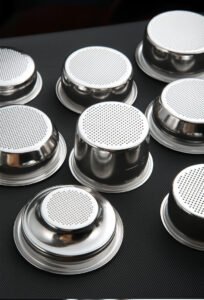
As a coffee accessory manufacturer, I've struggled with inconsistent hole specifications when importing coffee baskets from overseas suppliers. The wrong hole pattern can completely ruin extraction quality.
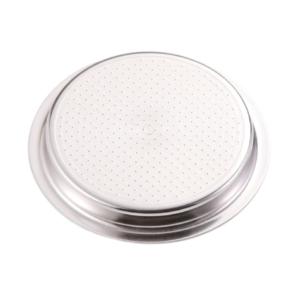
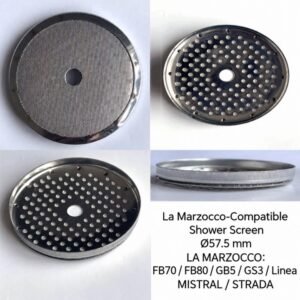
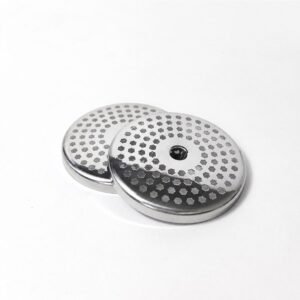
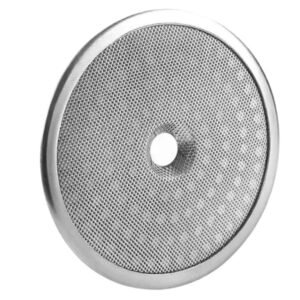
When importing custom coffee baskets and shower screens from China, you have extensive customization options for hole diameter (0.2-0.5mm), hole count (up to 2000+), hole-field diameter (30-49mm), and hole spacing patterns (1.5-2.0mm). Chinese manufacturers can customize all these specifications using either stamping or laser drilling methods.
Let me share what I've learned through years of working with Chinese manufacturers to help you navigate these customization options and ensure you get exactly what your coffee business needs.
What Hole Specifications Can Chinese Manufacturers Deliver?
I've seen countless coffee businesses waste thousands on baskets with incorrect hole specifications because they didn't understand what to ask for. Getting this wrong means inconsistent extraction and unhappy customers.
Chinese manufacturers can produce holes ranging from 200-500 microns (0.2-0.5mm) in diameter, with industry standard being 300 microns. They can create patterns with 400-2000+ holes depending on basket size, arranged in rectangular or hexagonal patterns with spacing between 1.5-2.0mm across field diameters of 30-49mm.
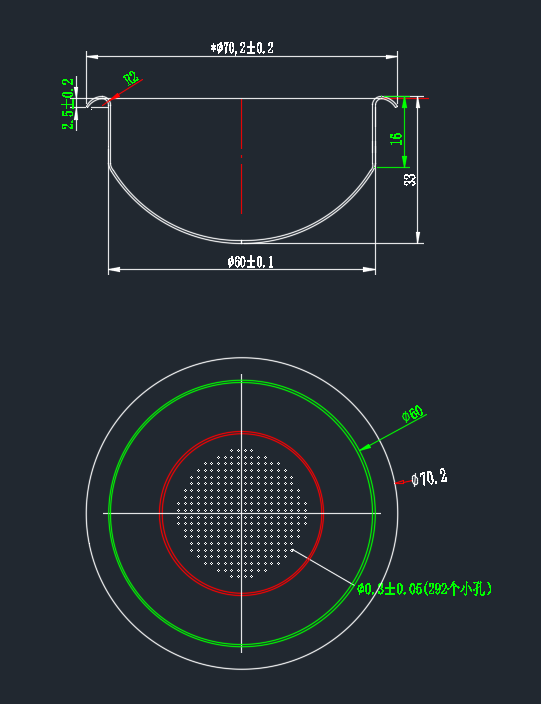
When sourcing custom coffee baskets and shower screens, understanding hole specifications is crucial for extraction quality. During my years manufacturing precision coffee tools, I've encountered significant variation in what different facilities can deliver.
Hole Diameter Options
The hole diameter significantly impacts flow resistance and extraction characteristics. While most manufacturers advertise capabilities from 0.2mm to 0.5mm, the practical reality differs based on manufacturing method:
| Manufacturing Method | Minimum Diameter | Maximum Diameter | Typical Tolerance | Price Impact |
|---|---|---|---|---|
| Traditional Stamping | 0.25mm | 0.40mm | ±0.05mm | Lower cost, increases with smaller holes |
| Laser Drilling | 0.20mm | 0.50mm | ±0.03mm | 30-50% premium over stamping |
| Etching Process | 0.22mm | 0.34mm | ±0.02mm | Highest cost option |
From my experience, most quality issues stem from manufacturers overpromising on precision. While premium manufacturers like VST and IMS maintain tolerances of ±20-30 microns, typical Chinese manufacturers realistically achieve ±50-100 micron tolerances without specialized equipment.
Hole Count and Distribution Options
The number of holes directly affects open area percentage and extraction uniformity. Chinese manufacturers can typically accommodate:
- Standard 58mm filter baskets: 400-800 holes
- Competition grade baskets: 800-1500 holes
- Ultra-high precision baskets: 1500-2000+ holes
What many distributors don't realize is that hole count alone doesn't determine quality. The pattern distribution is equally important. Our factory offers three primary distribution patterns:
- Hexagonal Pattern - Provides the most uniform water distribution and is ideal for light roasts needing even extraction
- Grid Pattern - Offers balanced flow characteristics suitable for medium roasts
- Concentric Circle Pattern - Creates slightly higher flow at the center, often preferred for darker roasts
Hole-Field Diameter Considerations
The hole-field diameter (the area containing perforations) ranges from 30mm for smaller machines up to 49mm for standard 58mm E61 group baskets. I've found the ideal ratio is typically 75-85% of the inner basket diameter.
One customization advantage when working with Chinese manufacturers is the ability to specify non-standard hole-field diameters. This can be particularly valuable when designing baskets for machines with unique flow characteristics or when trying to replicate the performance of a specific basket design.
Can I Specify My Own Open-Area Percentage and Hole Distribution?
I've seen coffee brands struggle with inconsistent shots despite using the same coffee and equipment. When we investigated, we discovered the basket's open area percentage varied by 30% between batches - a manufacturing oversight ruining their consistency.
Yes, you can specify your own open-area percentage (typically 2-4%) and hole distribution pattern when ordering custom coffee baskets from China. Manufacturers can calculate and adjust hole diameter, count, and spacing to achieve your target open area based on your specific extraction requirements for different bean types and roast profiles.
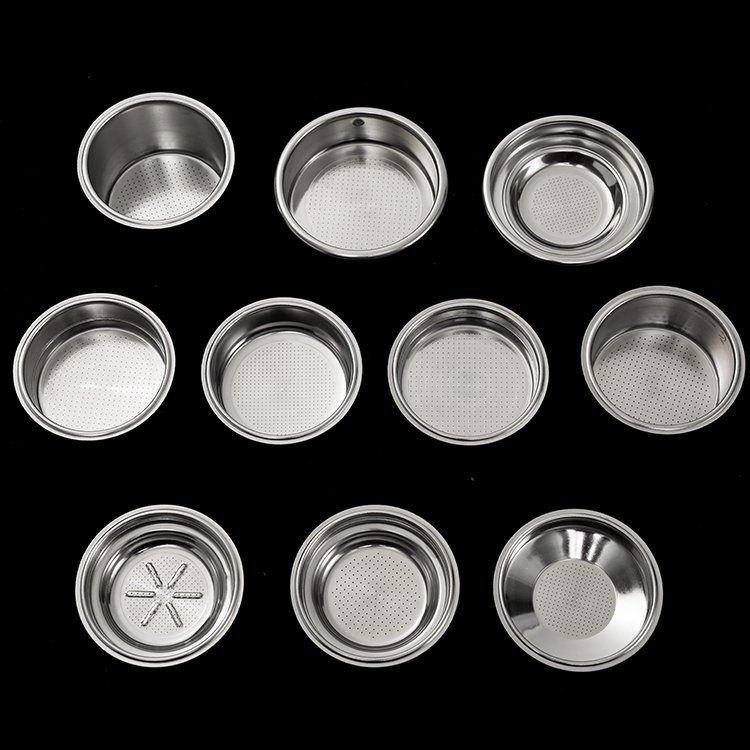
Open-area percentage is one of the most impactful yet often overlooked aspects of basket design. As someone who has manufactured thousands of custom baskets, I can confirm that Chinese manufacturers can definitely accommodate specific open-area percentage requests, but there are important considerations to understand.
Understanding Open-Area Percentage and Its Impact
Open-area percentage refers to the ratio of the total hole area to the total basket bottom area. This seemingly simple calculation has profound effects on extraction:
| Open-Area Percentage | Flow Characteristics | Best For | Extraction Notes |
|---|---|---|---|
| 1.5-2.0% | High resistance, slow flow | Light roasts, single-origin | Extended contact time, higher extraction yield |
| 2.1-3.0% | Moderate resistance, balanced flow | Medium roasts, blends | Standard extraction parameters, versatile |
| 3.1-4.0% | Lower resistance, faster flow | Dark roasts, commercial settings | Reduced bitterness, higher volume output |
| 4.1%+ | Very fast flow | Specialty applications, Turkish-style | Requires precise grind adjustment, specialized use |
The calculation uses this formula:
Open Area % = (π × r² × hole count) ÷ (π × basket_radius²) × 100Where r is the hole radius and hole count is the total number of perforations.
How Manufacturers Adjust Open-Area Percentage
When you specify a target open-area percentage, Chinese manufacturers typically adjust one or more of these variables:
- Hole diameter - The fastest way to change open area without altering pattern
- Hole count - Adding or removing holes while maintaining pattern
- Hole-field diameter - Expanding or contracting the perforated area
In our manufacturing facility, we've developed optimization software that can calculate the ideal combination of these variables to achieve target open-area percentages while maintaining pattern integrity.
Customizing Hole Distribution for Specific Extraction Profiles
Beyond simple open-area percentage, advanced customization includes:
Center-to-Edge Flow Distribution
We can create graduated hole patterns with different densities from center to edge. This technique, sometimes called "flow profiling," can address common extraction issues like:
- Channeling around edges (solved by reduced hole density at perimeter)
- Underextraction in the center (solved by increased hole density in the center)
- Uneven puck erosion (solved by balanced, graduated patterns)
Zone-Based Extraction
For specialty applications, we've developed zone-based distribution patterns where different regions of the basket bottom have distinct hole characteristics. This can be particularly valuable for:
- Multi-origin blends with different extraction requirements
- Compensating for machine-specific water distribution patterns
- Creating signature extraction profiles for branded baskets
The key when requesting custom open-area specifications is to clearly document your requirements with numeric tolerances. Rather than asking for "precision holes," specify "0.30mm ±0.05mm diameter" and "2.4-2.6% open area tolerance."
Will Manufacturers Match My Reference Basket's Hole Pattern?
I once sent a premium IMS basket to three different Chinese suppliers asking each to match it exactly. The results were eye-opening - one came within 90% accuracy, another created something completely different, and the third admitted they couldn't match the precision but offered alternatives.
Yes, most Chinese manufacturers can attempt to match reference basket hole patterns if you provide a sample, though success varies by their equipment capabilities. For best results, provide both the physical sample and detailed specifications (hole diameter, count, spacing pattern). Most manufacturers can achieve 85-90% pattern matching, but expect wider tolerances than premium brands.
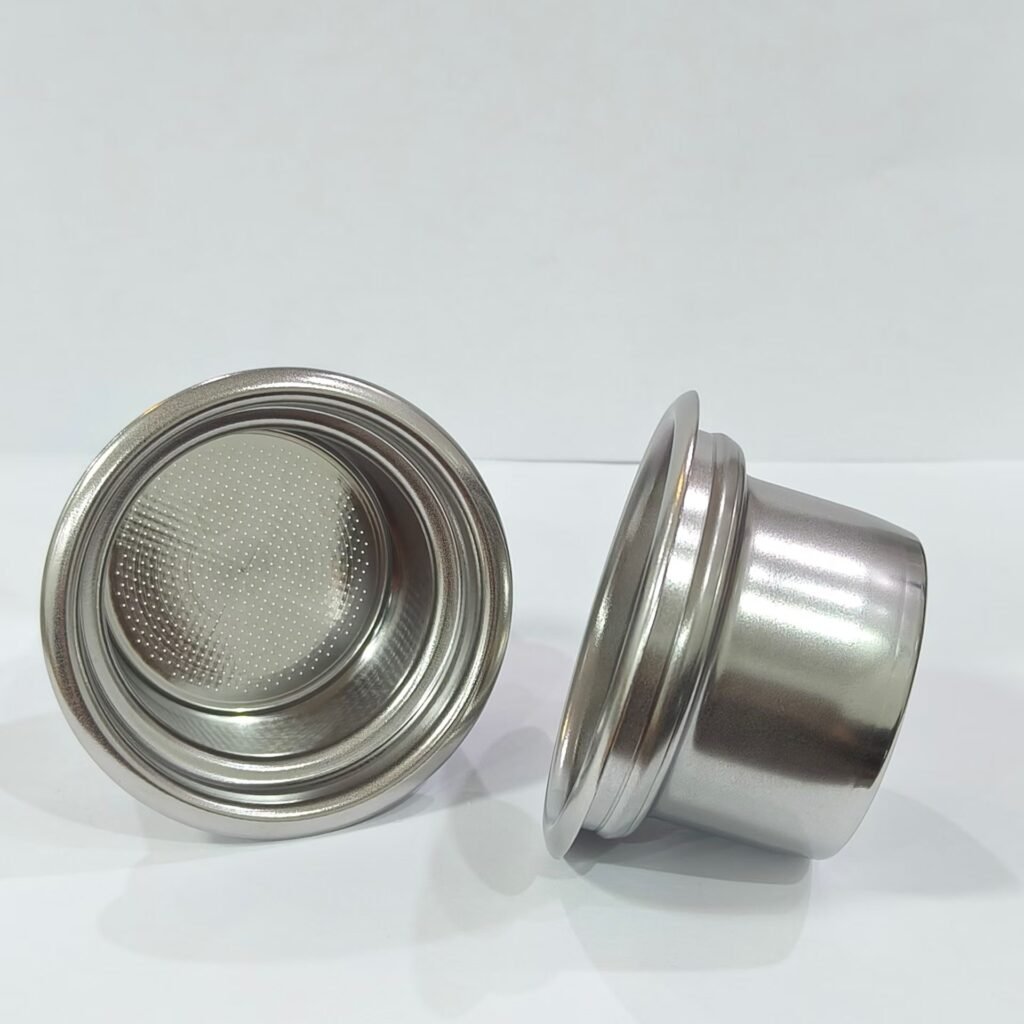
Reference basket matching is a common request in the coffee accessory industry, particularly when distributors want to create compatible alternatives to popular premium baskets. Based on my extensive experience with Chinese manufacturing partners, I can provide insight into what's realistically possible.
The Reference Matching Process
When you provide a reference basket, Chinese manufacturers typically follow this process:
- Visual Inspection and Measurement - They'll examine the sample using optical equipment to identify key parameters
- Pattern Recognition - Using imaging software to determine the hole arrangement pattern
- Specification Documentation - Creating technical drawings with measurements
- Manufacturing Method Selection - Determining whether to use stamping, laser drilling, or etching
- Sample Production - Creating test samples for approval
- Refinement - Adjusting specifications based on feedback
Critical Factors Affecting Matching Accuracy
The accuracy of reference matching depends on several factors that aren't always obvious:
Manufacturing Equipment Limitations
| Equipment Type | Pattern Matching Capability | Typical Accuracy | Minimum Detectable Detail |
|---|---|---|---|
| Basic Optical Inspection | Simple patterns only | 70-80% | 0.1mm |
| Standard CCD Imaging | Standard patterns | 80-90% | 0.05mm |
| Advanced Vision Systems | Complex patterns | 90-95% | 0.02mm |
| Precision Measurement | Premium patterns | 95-98% | 0.01mm |
One significant challenge is that premium baskets like VST and IMS use manufacturing methods that aren't always available or economically viable for standard production. For instance, IMS uses a proprietary etching process that creates a specific hole profile difficult to replicate with standard equipment.
Providing Effective Reference Specifications
To maximize matching accuracy, I recommend providing:
- Physical Sample - Send an actual basket when possible
- High-Resolution Photos - Include images with a calibrated scale visible, showing both top and bottom surfaces
- Known Specifications - Document any parameters you already know:
- Hole diameter (top and bottom if conical)
- Pattern type (hexagonal, grid, concentric)
- Hole count (if known)
- Hole-field diameter
- Open area percentage
Realistic Expectations for Pattern Matching
From my experience manufacturing thousands of baskets, here's what you should realistically expect:
- Pattern Replication: 90-95% visual similarity achievable
- Hole Count: Can typically match exactly
- Hole Diameter: Within ±0.05mm of original (vs. ±0.02mm for premium brands)
- Open Area: Within ±0.3% of original (vs. ±0.1% for premium brands)
- Performance: Similar but not identical extraction characteristics
It's important to understand that while a matched basket may look very similar, the extraction performance can still vary due to subtle differences in hole shape, hole edge quality, and material properties. This is why I always recommend requesting samples for evaluation before placing larger orders.
Can I Get Design Proposals Based on My Target Flow Rate and Shot Time?
In my early days sourcing coffee accessories, I specified exactly how many holes I wanted in a basket - a rookie mistake. The supplier never asked about my target extraction time or flow rate. The resulting baskets pulled 16-second shots that were terribly under-extracted!
Yes, Chinese manufacturers offering OEM/ODM services can provide design proposals based on your target flow rate and shot time. Simply specify your target parameters (25-30 second shots, 1.5-2.0 g/s flow rate) along with dose weight, and manufacturers with engineering teams can calculate appropriate hole specifications and provide sample baskets for testing.
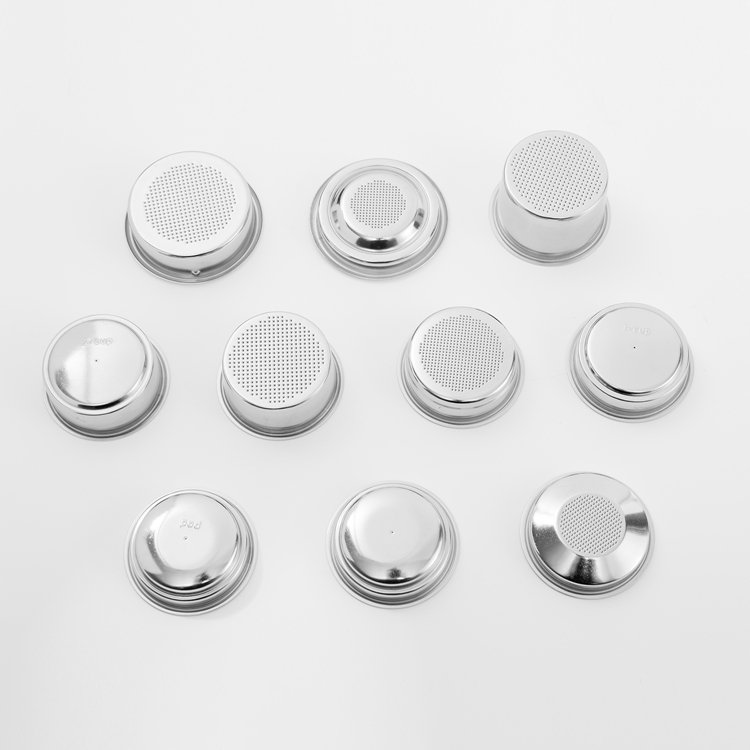
Working with manufacturers who understand the relationship between hole specifications and extraction parameters can dramatically improve your results. Unlike generic basket producers, specialized coffee equipment manufacturers in China have developed sophisticated approaches to designing baskets for specific extraction goals.
The Design Proposal Process
When working with our engineering team at SIF Coffee Tools, we follow a structured approach to creating custom basket designs based on extraction parameters:
-
Requirement Analysis - We collect key information from clients:
- Target shot time (e.g., 25-30 seconds)
- Target flow rate range (e.g., 1.5-2.0 g/s)
- Dose weight (e.g., 18g, 20g, 22g)
- Roast preference (light, medium, dark)
- Machine type and pressure profile
-
Flow Resistance Calculation - Our engineers then calculate the required hydraulic resistance characteristics:
R = (P × t) ÷ (V × d)Where R is resistance, P is pressure, t is time, V is volume, and d is dose
-
Design Parameter Determination - We convert resistance requirements into physical specifications:
- Required open area percentage
- Optimal hole diameter
- Ideal hole count and distribution pattern
-
Digital Simulation - For complex projects, we use fluid dynamics modeling to predict extraction behaviors
-
Prototype Development - We produce sample baskets for client evaluation
-
Iterative Refinement - Based on testing feedback, we refine the design
Types of Design Proposals Available
Depending on your requirements and budget, Chinese manufacturers typically offer several levels of design proposals:
| Design Approach | Turnaround Time | Design Fee | Min. Order | Best For |
|---|---|---|---|---|
| Standard Flow-Based | 10-15 days | Often waived with order | 500-1000 pcs | Basic custom baskets |
| Performance-Optimized | 15-25 days | $200-500 | 1000-3000 pcs | Specialty coffee brands |
| Full Custom Development | 30-45 days | $500-1500 | 3000+ pcs | Commercial coffee equipment |
Key Information to Provide for Accurate Design Proposals
To receive the most accurate design proposals, I recommend specifying:
Essential Parameters
- Target dose weight range (e.g., 18-20g)
- Desired shot time range (e.g., 25-30 seconds)
- Target flow rate or yield (e.g., 1.5-1.8 g/s or 36-40g output)
- Machine operating pressure (e.g., 9 bar, 6-9 bar variable)
Additional Helpful Information
- Typical coffee origin and processing method
- Roast level preference
- Grinder type and typical particle distribution
- Any current basket performance issues you're trying to solve
Case Study: Flow Rate Optimization
One of our European clients was struggling with inconsistent extraction times across different origins. Their original baskets produced excellent results with Brazilian coffees but led to channeling with Ethiopian beans.
By analyzing their specific requirements, we designed a custom basket with:
- 3.2% open area (versus their original 2.7%)
- 0.28mm holes (slightly smaller than their original 0.32mm)
- Increased hole count (720 vs 480)
- Edge-focused pattern to reduce channeling
The resulting baskets extended their shot times for lighter roasts by approximately 4-6 seconds while maintaining consistent flow rates, significantly improving extraction uniformity across different origins.
How Will My Hole Specifications Be Verified Before Shipment?
I once approved a large order of shower screens that looked perfect but actually had 15% of holes partially blocked by burrs. The manufacturer hadn't checked using backlight inspection. When our customers complained about uneven spray patterns, we had to scrap the entire batch.
Chinese manufacturers verify hole specifications using optical inspection systems, though thoroughness varies by facility. Quality suppliers use machine vision systems to measure hole diameter, count, circularity, and pattern alignment. For critical orders, request individual measurement certificates showing actual values against tolerances, sample inspection methodology, and blocked hole testing results.
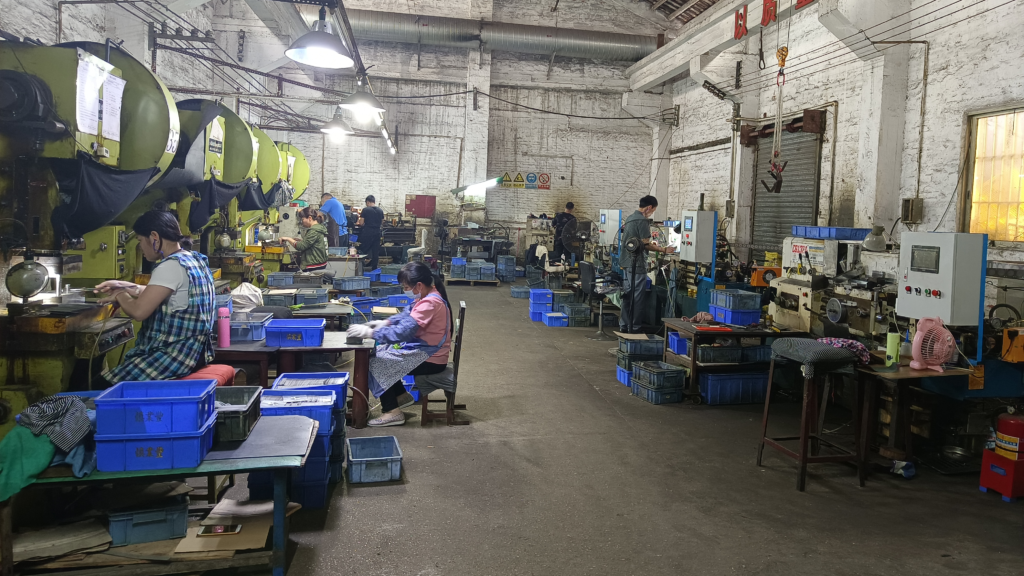
Quality verification is perhaps the most significant differentiator between manufacturers when sourcing custom coffee baskets and shower screens. Drawing from my experience managing our 5000㎡ manufacturing facility with strict quality control systems, I can provide insight into what verification methods are available and what you should specifically request.
Quality Control Technologies Available
Chinese manufacturers use varying levels of inspection technology depending on their quality standards:
Basic Optical Inspection
Entry-level manufacturers typically use simple optical comparators or backlit inspection tables to visually check for obvious defects. This method is subjective and limited to detecting:
- Missing or blocked holes
- Gross pattern deviations
- Visible burrs or defects
Standard Machine Vision Systems
Mid-tier manufacturers employ automated vision systems with measurement capabilities:
- Automated hole counting
- Basic dimension measurements
- Pattern verification against templates
- Simple pass/fail criteria
Advanced Optical Metrology
Premium manufacturers utilize sophisticated measurement systems:
- Precise hole diameter measurement (±0.01mm accuracy)
- Hole circularity assessment
- Complete pattern mapping and analysis
- Open area percentage calculation
- Blocked hole detection with high sensitivity
- Edge quality assessment
Verification Process Documentation
The most important aspect of quality verification is proper documentation. Here's what you should request:
| Documentation Type | Information Included | Why It's Important |
|---|---|---|
| Inspection Method Statement | Equipment used, sample size, measurement points | Confirms adequacy of testing approach |
| Dimensional Report | Hole diameters, spacing, field diameter | Verifies physical specifications |
| Statistical Analysis | Min/max values, standard deviation, Cpk values | Indicates consistency and process control |
| Visual Inspection Report | Images of inspected items, defect maps | Provides visual confirmation of quality |
| Certificate of Compliance | Summary of all tests against specifications | Official quality assurance document |
Inspection Parameters You Should Specify
When placing orders, clearly define these inspection requirements:
-
Measurement Sample Size:
- VST and IMS measure 100% of holes in their premium baskets
- Most Chinese manufacturers sample 5-10% of holes
- Request at least 10% sampling for standard orders
- For critical applications, specify higher sampling rates
-
Critical Tolerance Parameters:
- Hole diameter tolerance (e.g., 0.30mm ±0.03mm)
- Open area percentage tolerance (e.g., 2.5% ±0.2%)
- Hole count tolerance (exact count or ±1%)
- Pattern centering tolerance (typically ±0.5mm)
-
Functional Testing:
- Flow rate testing (specified in ml/s at standard pressure)
- Blocked hole detection (backlight testing)
- Edge burr verification (microscopic examination)
Implementing a Staged Quality Verification Approach
For best results, I recommend implementing a three-stage verification process:
Stage 1: Pre-Production Sample Approval
Before mass production, request 3-5 samples with complete measurement reports for approval.
Stage 2: In-Process Inspection
For larger orders, request inspection reports from the beginning, middle, and end of the production run to ensure consistency.
Stage 3: Pre-Shipment Inspection
Final verification before packing, including:
- Dimensional compliance verification
- Visual inspection for defects
- Functional testing if applicable
- Complete documentation package
Case Study: Avoiding Quality Issues
In our early days, we once had to reject an entire shipment of 10,000 baskets due to inconsistent hole diameters that weren't detected during standard inspection. The lesson was invaluable - we now implement a comprehensive measurement protocol that includes:
- Automated optical measurement of 100% of baskets for hole count
- Statistical sampling of 10% of baskets for detailed measurement
- Flow testing of sample baskets from each production batch
- Detailed documentation with actual measured values, not just pass/fail
This approach has reduced quality issues by over 95% and ensures our customers receive baskets that perform consistently batch after batch.
Conclusion
When importing custom coffee baskets and shower screens from China, you have extensive customization options for hole specifications that can dramatically impact extraction quality. By clearly communicating your precise requirements and implementing proper verification processes, you can obtain high-quality products tailored to your specific extraction needs.