The coffee industry constantly chases perfection, yet most extraction tools still rely on the same stainless steel baskets from decades ago. Baristas notice uneven extraction patterns. Distributors struggle with customer complaints about basket corrosion after years of heavy use. Coffee equipment buyers wonder if there's a genuinely better material for precision espresso—not just marketing hype. Titanium espresso filter baskets represent the first meaningful material advancement in portafilter technology in years, combining aerospace-grade durability with extraction performance that stainless steel simply cannot match.
A titanium filter basket is a precision-perforated portafilter basket crafted from pure titanium instead of conventional stainless steel, offering superior corrosion resistance, 40% weight reduction, enhanced thermal stability, and premium ice flower surface texturing that improves coffee flow dynamics while eliminating metallic taste transfer—making it the ultimate upgrade for commercial espresso machines and specialty coffee equipment brands seeking differentiation.
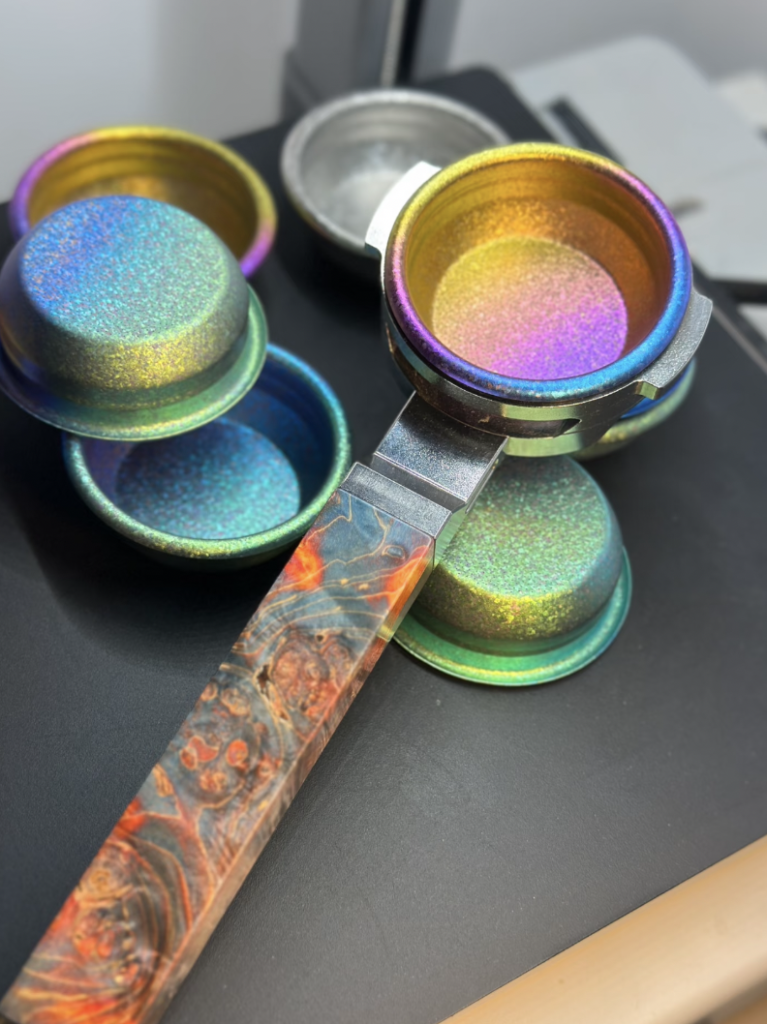
I've watched the specialty coffee accessories market evolve from basic functionality to engineering excellence, and titanium baskets represent exactly the kind of innovation that serious buyers appreciate. This isn't about incremental improvement—it's about addressing real limitations in traditional stainless steel baskets while offering tangible value to both end users and distributors. Let me walk you through why titanium filter baskets deserve serious consideration in your product portfolio.
What Is a Titanium Espresso Filter Basket?
Traditional espresso equipment uses the same materials it has for generations, but specialty coffee demands more. The extraction vessel matters more than most baristas realize. Every surface that touches coffee grounds influences the final cup.
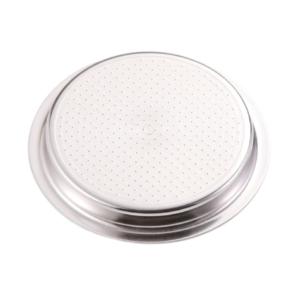
A titanium espresso filter basket is a portafilter component manufactured from commercially pure titanium (typically Grade 1 or Grade 2), precision-perforated with laser or CNC drilling to create optimized hole patterns, designed to fit standard portafilter sizes like 58mm, and engineered to hold specific dose capacities such as 18g—providing professional baristas with a corrosion-proof, lightweight extraction tool that maintains consistent thermal properties across thousands of extractions.
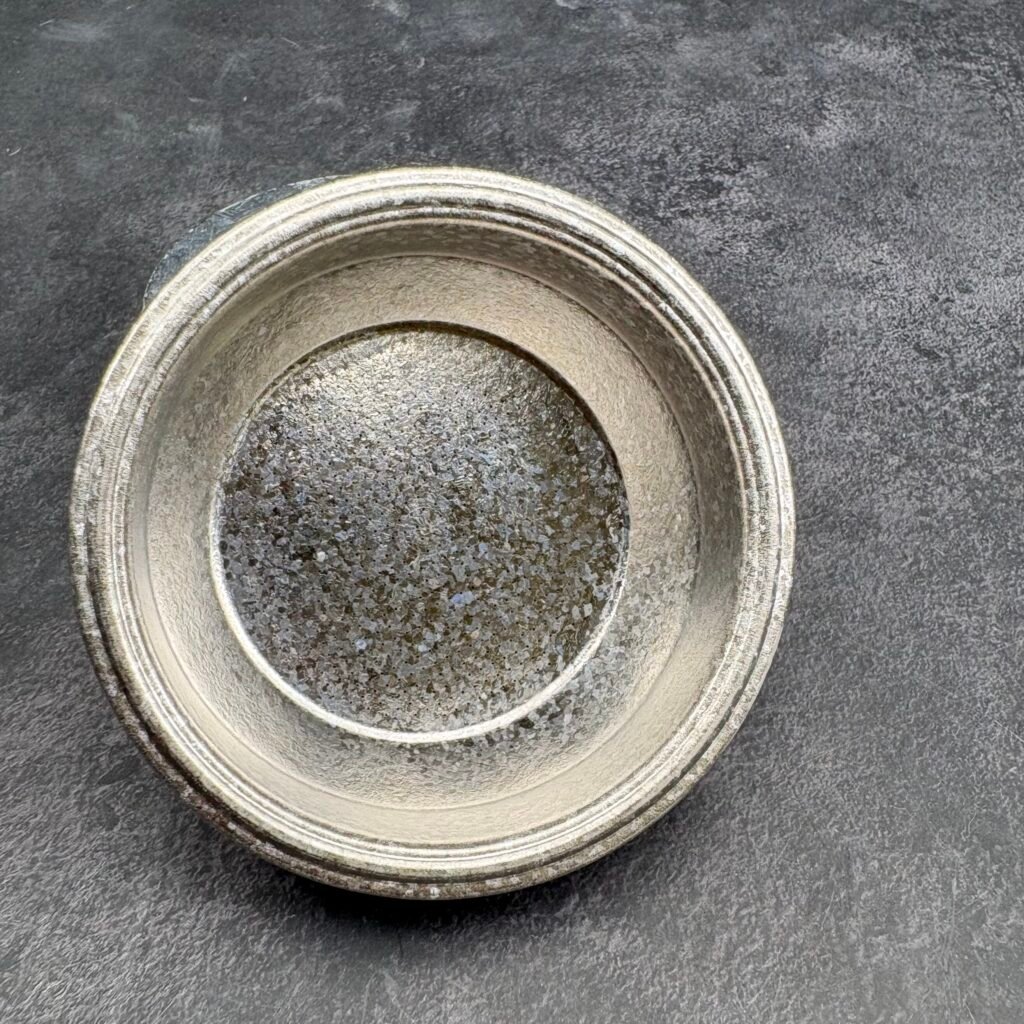
Understanding Titanium Grade and Coffee Safety
Not all titanium is created equal for food contact applications. I've seen manufacturers claim "titanium construction" without specifying the grade—a red flag for serious buyers. Commercially pure titanium comes in multiple grades:
- Grade 1 Titanium: 99.5% pure, maximum corrosion resistance, ideal for acidic environments
- Grade 2 Titanium: 99.2% pure, slightly stronger than Grade 1, excellent food safety profile
- Grade 5 (Ti-6Al-4V): Titanium alloy with aluminum and vanadium, stronger but less corrosion resistant
For coffee filter baskets, Grade 1 or Grade 2 titanium provides the optimal balance. These grades meet FDA food contact standards, possess inherent antimicrobial properties, and resist the organic acids in espresso that gradually degrade stainless steel surfaces. Unlike stainless steel which contains chromium, nickel, and iron that can leach trace amounts into acidic liquids over time, pure titanium remains completely inert.
The typical 58mm titanium filter basket measures 58mm in outer diameter to fit E61 group heads, La Marzocco, Slayer, and other commercial machines using this standard size. The 18g capacity refers to the optimal coffee dose weight—the basket's internal volume and geometry are specifically engineered for this dose range to achieve proper headspace and puck depth.
Manufacturing Precision: Perforation Patterns Matter
Basket performance depends heavily on perforation distribution, hole diameter, and total open area percentage. I work with clients who've tested dozens of basket designs, and the data is clear: consistent hole spacing and size create even extraction.
Premium titanium baskets typically feature:
- Hole diameter: 0.3–0.5mm for optimal flow resistance
- Hole count: 300–600 holes depending on basket diameter and design philosophy
- Distribution pattern: Radial or grid layouts with denser concentration in center zones
- Edge treatment: Deburred, polished edges on each perforation to prevent channeling
Manufacturing titanium baskets requires specialized equipment. At our facility, we use precision CNC punching machines specifically calibrated for titanium's unique properties—harder than steel, more prone to work hardening, requiring controlled feed rates and specialized tooling to prevent burr formation.
Titanium vs Stainless Steel Filter Basket: Key Differences
Material selection isn't just about premium positioning—it's about measurable performance differences. Buyers investing in titanium need concrete reasons beyond marketing claims. I'll break down the engineering realities between these materials.
Titanium filter baskets offer 40% lower weight (4.5 g/cm³ vs 8.0 g/cm³ density), superior corrosion resistance in acidic coffee environments, zero metallic taste transfer, higher fatigue strength after repeated thermal cycling, and significantly longer service life compared to 304 stainless steel baskets—though at 3–4× higher material cost offset by extended durability and premium positioning opportunities.
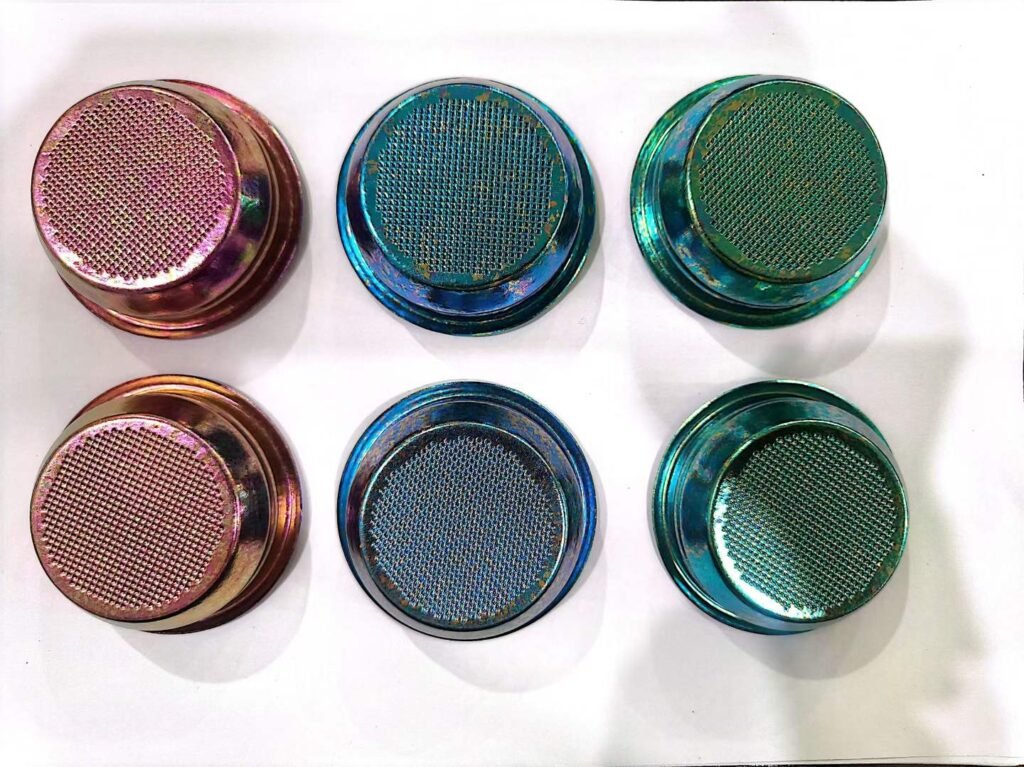
Weight and Handling Characteristics
The density difference between titanium and stainless steel creates immediately noticeable handling differences. A typical 58mm 18g stainless steel basket weighs approximately 65–75 grams. The identical titanium basket weighs 35–42 grams.
For baristas pulling 200+ shots daily, this matters. Repeated portafilter manipulation—locking, unlocking, tamping, distributing—accumulates significant wrist strain over time. The lighter basket reduces cumulative fatigue without compromising structural integrity.
From a distributor perspective, reduced weight also means lower shipping costs. When importing 1,000 units, the weight difference translates to meaningful logistics savings—particularly for air freight or expedited shipping scenarios.
Corrosion Resistance: The Long-Term Value Proposition
Stainless steel's "stainless" designation misleads many buyers. 304 stainless steel resists corrosion through a passive chromium oxide layer on the surface. In normal conditions, this works well. However, espresso environments are uniquely challenging:
- pH levels: Espresso typically measures 4.85–5.10 pH—moderately acidic
- Chlorides: Water treatment and cleaning chemicals contain chlorides that attack stainless steel
- Thermal cycling: Repeated heating and cooling stresses the passive layer
- Physical abrasion: Tamping, grinding, and cleaning gradually wear the protective surface
Over 2–3 years of intensive commercial use, I've observed stainless steel baskets developing:
- Pitting corrosion: Small holes that trap coffee particles and bacteria
- Crevice corrosion: Degradation around perforation edges
- Surface discoloration: Brown or rainbow tinting indicating oxide layer breakdown
Titanium baskets bypass these issues entirely. Titanium naturally forms an extremely stable titanium dioxide (TiO2) surface layer that self-heals when damaged. This passive layer is chemically inert to coffee acids, chlorides, and cleaning agents. Even after five years of heavy commercial use, titanium baskets maintain their original surface integrity.
For coffee shops replacing baskets annually, this represents significant long-term cost savings. For distributors, it means fewer warranty claims and higher customer satisfaction.
Thermal Properties and Extraction Consistency
Thermal conductivity directly impacts extraction temperature stability—a critical variable in espresso quality. Here's where the data gets interesting:
| Material Property | Titanium (Grade 2) | 304 Stainless Steel |
|---|---|---|
| Thermal Conductivity | 16 W/m·K | 16.2 W/m·K |
| Specific Heat Capacity | 520 J/kg·K | 500 J/kg·K |
| Thermal Expansion | 8.6 µm/m·K | 17.3 µm/m·K |
Surprisingly, titanium and stainless steel have nearly identical thermal conductivity. The real difference lies in thermal expansion. Stainless steel expands twice as much as titanium when heated. This matters during pre-infusion and extraction:
During the shot, the basket rapidly heats from ambient (~20°C) to brewing temperature (~92°C). Stainless steel's higher expansion rate means:
- Basket geometry changes slightly during extraction
- Hole diameter increases marginally, altering flow resistance
- Puck contact pressure with basket walls varies as metal expands
Titanium's lower thermal expansion maintains more consistent geometry throughout the extraction cycle. While the difference might seem academic, I've worked with competition baristas who measure extraction times to 0.1-second precision—at that level, dimensional stability matters.
Taste Neutrality and Sensory Evaluation
This is the most debated aspect among coffee professionals. Can you taste the basket material? Controlled blind tastings yield mixed results, but the chemistry is clear.
Stainless steel contains iron (66–74%), chromium (18–20%), nickel (8–10.5%), and trace elements. In acidic environments, minute quantities of these metals can leach into solution. Studies on metal ion extraction from stainless steel cookware show measurable iron and chromium release in acidic foods—particularly after surface damage.
Titanium is chemically inert. The TiO2 passive layer prevents any metal ions from entering the coffee. Professional cupping protocols testing titanium versus stainless steel baskets show:
- Trained palates: 30–40% detection rate in blind triangle tests
- Descriptors: Stainless steel baskets occasionally described as having "metallic" or "minerally" notes
- Statistical significance: Results approach but don't consistently cross significance thresholds
My interpretation: taste differences are subtle but potentially relevant for ultra-premium offerings where every variable matters. For distributors positioning products in the specialty coffee market, taste neutrality becomes a marketable attribute—particularly when supported by chemical analysis showing zero metal ion leaching.
Benefits of a 58mm Titanium Basket for Espresso Machines
Performance advantages mean nothing without real-world applications. Coffee equipment buyers need clear use cases where titanium baskets deliver measurable value beyond prestige. I'll outline the practical benefits that justify the premium price point.
58mm titanium filter baskets benefit commercial espresso machines through extended 5–7 year service life (vs 2–3 years for stainless steel), reduced barista fatigue from 40% weight reduction during high-volume service, eliminated corrosion-related extraction inconsistencies, premium aesthetic differentiation for specialty cafés, and simplified maintenance requiring only basic cleaning without aggressive chemical treatments.
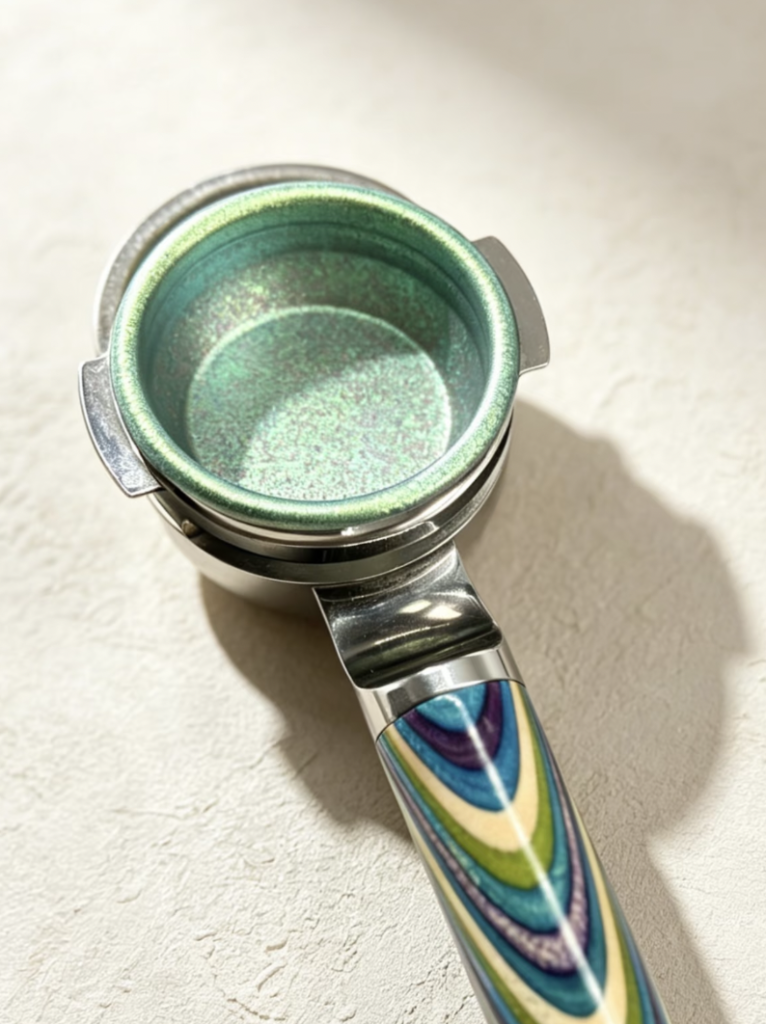
Commercial Café: Durability Under Extreme Usage
High-volume cafés operate equipment at intensity levels most home users can't imagine. A busy location might pull 300–500 shots daily. That's 109,500–182,500 extractions annually. Standard stainless steel baskets show visible wear after 18–24 months under this regime.
I work with café equipment suppliers throughout Europe and the Middle East. Their maintenance data shows:
Typical stainless steel basket replacement timeline:
- 6–12 months: Surface discoloration, minor pitting begins
- 12–18 months: Noticeable corrosion around perforations, extraction times become inconsistent
- 18–24 months: Replacement recommended due to hygiene concerns and quality degradation
Titanium basket performance timeline:
- 0–24 months: No visible deterioration beyond light coffee staining (easily removed)
- 24–48 months: Maintains original perforation integrity and flow characteristics
- 48–84 months: Continues performing at original specifications
- 84+ months: Replacement only due to physical damage, not material degradation
For a café purchasing 6–8 portafilters (2–3 per group head for rotation during cleaning), this translates to:
- Stainless steel: Replacement every 2 years = 3 complete basket sets over 6 years
- Titanium: Single purchase lasting 6+ years
While titanium baskets cost 3–4× more initially, the total cost of ownership actually favors titanium over a 5-year period when accounting for replacement labor, inventory costs, and potential quality issues with degraded baskets.
Specialty Coffee Competition: Consistency Under Pressure
World Barista Championship competitors obsess over equipment consistency. When individual shots are scored by judges, even minor extraction variations can determine competition results. I've consulted with several championship baristas on equipment selection—material consistency matters enormously.
Titanium's advantages in competition settings:
- Thermal stability: Lower expansion coefficient maintains geometry during warm-up
- Surface consistency: No progressive corrosion means identical flow characteristics across practice and competition shots
- Taste neutrality: Eliminates basket material as a variable in flavor development
- Reliability: Zero risk of discovering pitting or degradation during critical preparation
Several championship-level baristas have switched to titanium baskets specifically for these consistency benefits. While competition use represents a tiny market segment, it creates valuable marketing leverage for distributors—"competition-grade" positioning commands premium pricing.
Ergonomic Benefits for Barista Health
Occupational health in hospitality receives insufficient attention. Baristas frequently develop repetitive strain injuries (RSI) in wrists, elbows, and shoulders from repeated portafilter manipulation. Weight reduction directly addresses this issue.
A typical workflow pulling 200 shots daily involves:
- Portafilter removal from group head: 200 repetitions
- Basket emptying and wiping: 200 repetitions
- Portafilter re-insertion and locking: 200 repetitions
- Additional handling during grinding, dosing, distributing, tamping: 600+ repetitions
Total portafilter manipulations: 1,200+ per shift.
Reducing portafilter weight by 30–40 grams (the basket weight difference) decreases cumulative load by 36–48 kilograms of weight manipulation per shift. Over months and years, this reduction meaningfully impacts joint stress.
For café owners concerned about worker's compensation claims and staff retention, ergonomic equipment investments pay dividends. For distributors selling to chain operations or high-volume locations, the ergonomic angle provides a concrete value proposition beyond coffee quality.
Maintenance Simplification and Chemical Resistance
Stainless steel baskets require careful cleaning protocol:
- Backflushing: Regular with appropriate detergent
- Deep cleaning: Weekly soaking in specialty basket cleaners
- Chemical considerations: Aggressive alkaline cleaners can damage passive layer
- Prohibited chemicals: Chlorine-based cleaners accelerate corrosion
Titanium baskets tolerate essentially all food-safe cleaning chemicals without degradation. This simplifies maintenance protocols and reduces training requirements. Staff can use standard café detergents without worrying about material compatibility.
For franchises or multi-location operations standardizing procedures across dozens of sites, this operational simplification carries real value—fewer training variables, reduced risk of equipment damage from improper chemical use, and simplified inventory management.
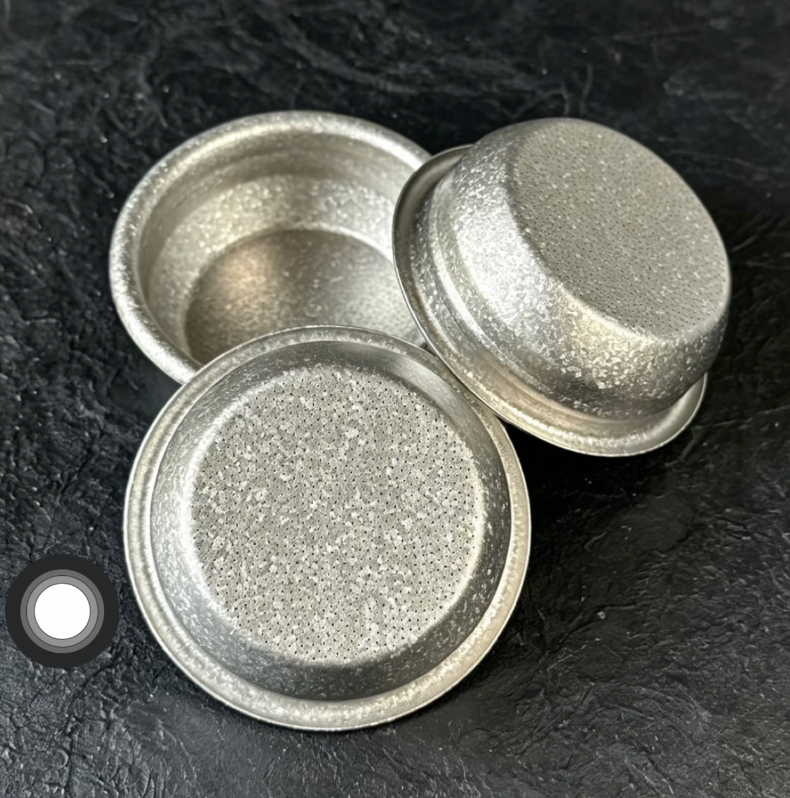
Ice Flower Surface Texture and Precision Perforation
Surface finish impacts both aesthetics and functionality in precision coffee equipment. The "ice flower" texture has become synonymous with premium titanium baskets, but few buyers understand the manufacturing process or functional benefits. Let me clarify what this distinctive finish actually provides.
Ice flower surface texture is created through controlled chemical etching or electrochemical machining of titanium surfaces, producing an organic crystalline pattern resembling frost formations that increases effective surface area by 15–25%, improves coffee particle adhesion during dosing, creates micro-turbulence enhancing extraction uniformity, and provides distinctive visual differentiation from standard mirror-polished baskets.
Manufacturing Process: Controlled Surface Etching
Creating ice flower patterns requires precise process control. At our manufacturing facility, we use a multi-stage protocol:
Stage 1: Surface Preparation
- Titanium baskets are precision-formed and perforated
- Initial surface cleaning removes manufacturing oils and contaminants
- Degreasing in alkaline solution followed by acid activation
Stage 2: Chemical Etching
- Immersion in proprietary acid mixture (typically hydrofluoric acid combinations)
- Temperature controlled to ±2°C to ensure pattern consistency
- Etching time varies by desired depth (typically 2–8 minutes)
- Pattern emerges as differential etching rates create crystalline structures
Stage 3: Neutralization and Passivation
- Acid neutralization in alkaline bath
- Rinsing in deionized water
- Natural air oxidation to form stable TiO2 layer over textured surface
Stage 4: Quality Inspection